
Shrubs That Stay Within Their Design Purpose
Hedge & Shrub Trimming in Seguin for landscapes where unchecked growth blocks windows, walkways, or sight lines
Overgrown shrubs begin blocking foundation vents and pushing against siding once they exceed the space originally planned for them during installation. Trax Landscape provides hedge and shrub trimming in Seguin and New Braunfels with attention to each plant natural growth habit and the role it serves in the landscape. Trimming happens at intervals that match the species and season, because pruning at the wrong time of year removes the buds that would have produced next season's flowers or triggers excessive regrowth that requires more frequent cutting.
The process involves shaping shrubs to maintain their intended form while removing dead or crossing branches that trap moisture and invite fungal problems. Timing matters more than frequency—spring-blooming shrubs get trimmed immediately after flowering ends, while summer bloomers are pruned in late winter before active growth begins. This approach preserves the plant's energy cycle and prevents the common mistake of cutting off all the buds just before they open.
Arrange an evaluation to review which shrubs need immediate trimming and which should wait until their dormant season.
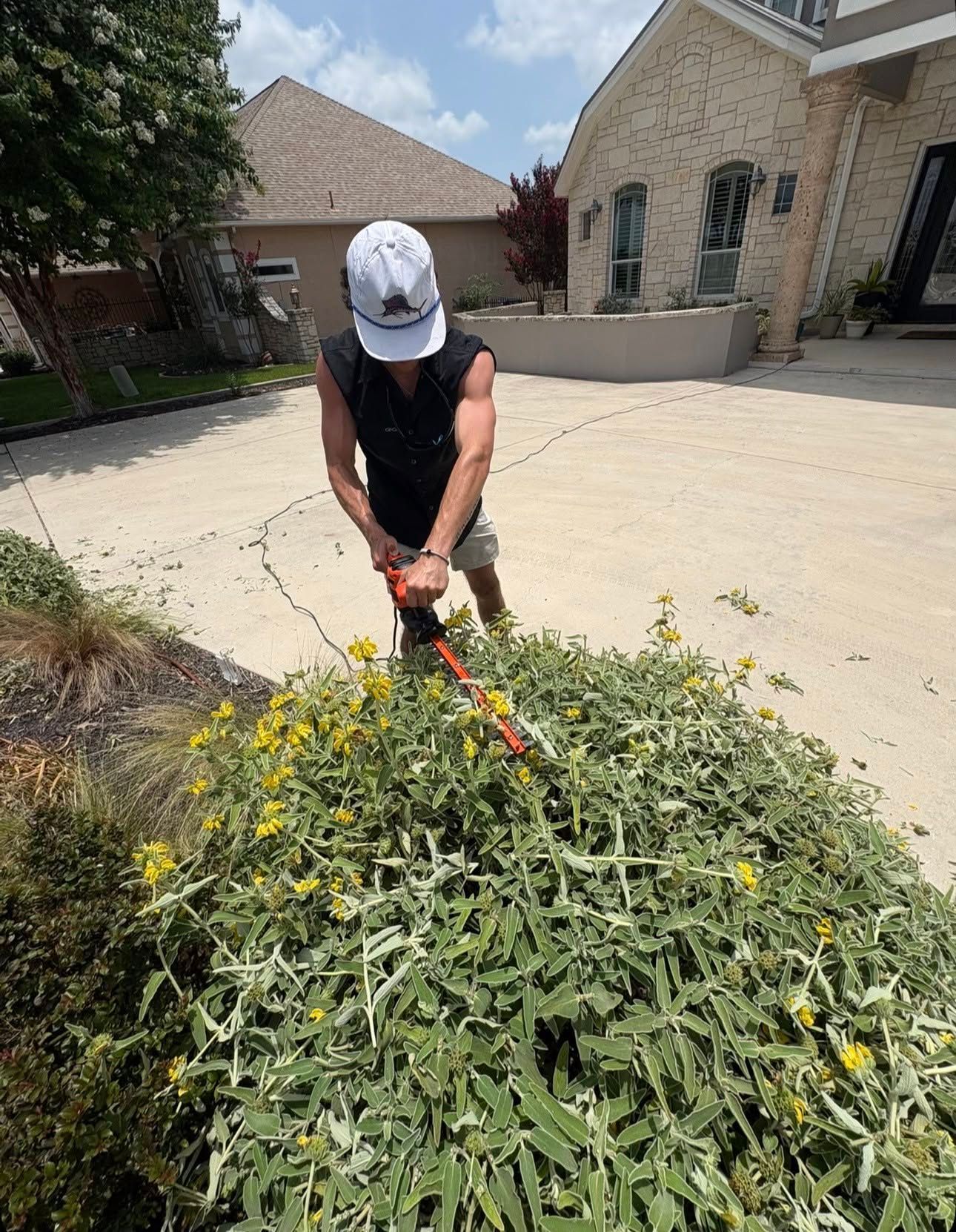
How Trimming Addresses Structural Plant Problems
Regular trimming controls the interior density of hedges and shrubs, which affects air circulation and light penetration to lower branches. Plants that become too dense inside develop dead zones where leaves can't photosynthesize, which weakens the overall structure and creates hiding places for pests. Selective thinning opens the canopy enough to keep interior growth active without removing so much that the plant looks sparse.
After trimming, shrubs show more uniform growth across their entire surface rather than concentrating all new shoots at the tips. The plants no longer lean toward light sources or grow unevenly on one side, and the reduction in weight prevents branches from splitting during storms. Cleanup includes hauling away all cuttings so debris doesn't smother surrounding groundcover or decompose against building foundations.
The service focuses on maintenance trimming rather than severe reduction cuts, though hedges that have been neglected for multiple seasons may require a staged approach where height and width are reduced gradually over two or three visits. Flowering shrubs receive species-specific timing to protect bloom cycles, while evergreen hedges are trimmed to maintain crisp edges and consistent height.
Answers to Frequent Trimming Questions
Property owners in Seguin often ask about timing and plant health before scheduling trimming services, especially when shrubs have grown beyond their intended size.
What time of year should most shrubs be trimmed?
Most evergreen shrubs tolerate trimming from late winter through early fall, but spring-blooming varieties like azaleas must be pruned immediately after flowers fade to avoid removing next year's buds.
How much can be removed without harming the plant?
Most shrubs tolerate removal of up to one-third of their total growth in a single session, but cutting more than that shocks the plant and delays recovery, especially during hot weather.
Why do some hedges grow back faster after trimming?
Hedges trimmed during active growth periods respond by producing more shoots from latent buds, while dormant-season pruning results in slower, more controlled regrowth that requires less frequent maintenance.
How does trimming prevent pest problems?
Thinning the interior allows air to circulate and sunlight to reach inner branches, which reduces the humid microclimates where spider mites, scale insects, and fungal spores thrive.
What happens if shrubs block foundation vents or windows?
Overgrown shrubs are cut back to restore clearance, and future trimming cycles are scheduled to prevent regrowth from encroaching on structures or obstructing ventilation and light.
Trax Landscape schedules trimming visits based on plant species and seasonal growth patterns to maintain landscape appearance without stressing the plants. Contact us to set up a trimming schedule tailored to your property's specific shrub varieties.