
Beds That Complement the Structure
Plant & Garden Beds in Seguin for properties where front yard landscaping lacks depth, color, or architectural balance
Foundation plantings that consist of a single row of shrubs create a flat appearance that does nothing to soften building corners or frame entryways. Plant and garden bed installations by Trax Landscape add layered depth to landscapes in Seguin and New Braunfels by combining plants of varying heights, textures, and seasonal interest. The design process starts with evaluating sun exposure, soil drainage, and how the home's roofline and windows interact with the surrounding yard, because plants placed without regard to these factors either fail to thrive or grow out of proportion within a few seasons.
Bed preparation involves defining borders, excavating to remove grass and weeds, and amending soil with organic matter to improve drainage and nutrient availability. Plant selection considers mature size, water requirements, and bloom timing so the bed maintains visual interest through multiple seasons without requiring constant replacement. Placement follows a layered approach where taller plants anchor corners and shorter varieties fill foreground areas, which creates sight lines that draw attention toward entry points.
Request a customized landscape plan to develop bed layouts that match your home's architecture and your maintenance preferences.
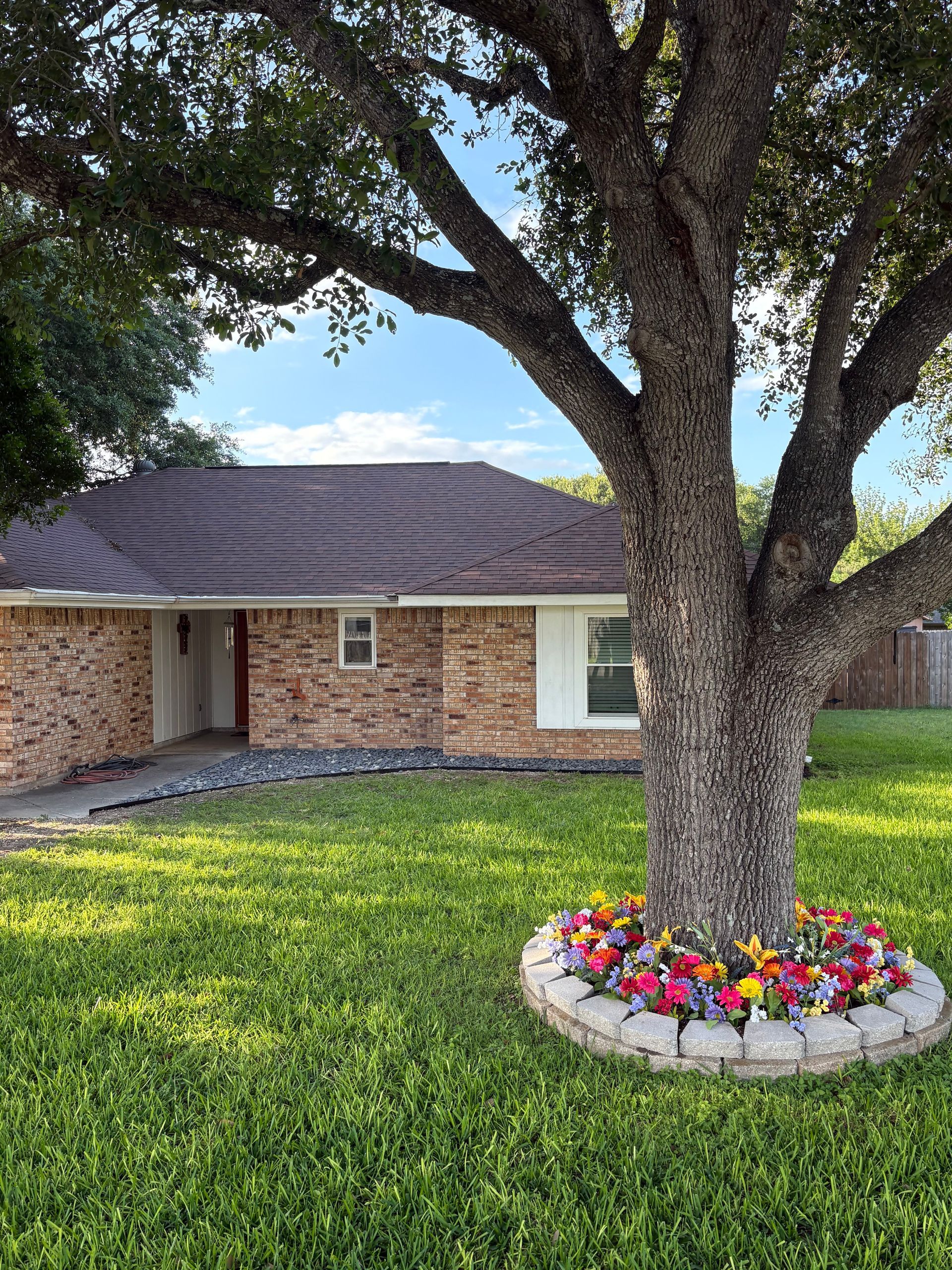
What Changes After Proper Bed Installation
Prepared beds drain faster than compacted lawn areas because the loosened and amended soil allows water to percolate through the root zone rather than running off the surface. This improved drainage prevents the root rot and fungal problems that occur when plants sit in saturated soil after heavy rain. The soil structure also makes it easier for roots to spread and establish, which reduces transplant shock and shortens the time before plants begin active growth.
After installation, the landscape shows intentional structure rather than a random collection of plants—the eye moves naturally from the street toward the entrance, and the building appears grounded rather than sitting awkwardly on a flat lawn. Seasonal color rotates through the bed as different plants bloom or display foliage changes, and the variety in plant texture creates visual contrast that holds interest even when nothing is flowering. Mulch applied after planting suppresses weeds and moderates soil temperature, which extends the time between watering sessions.
The service includes bed layout, soil preparation, plant selection and installation, and initial mulching, but does not include ongoing maintenance, fertilization, or irrigation system installation. Plant choices balance aesthetic goals with long-term care requirements, and the design accounts for how much space each plant will occupy at maturity to avoid overcrowding.
What Property Owners Usually Ask
Creating new garden beds involves decisions about plant types, bed size, and ongoing care, so these questions address the most common concerns before starting a project.
How is the bed layout determined?
Bed shape and size are based on the home's architectural lines, existing hardscape features, and sun exposure patterns throughout the day, which ensures plants receive appropriate light and the design complements the structure.
What plants work best for low-maintenance landscapes?
Native and adapted perennials like salvia, lantana, and ornamental grasses tolerate Seguin's heat and require less water once established, which reduces long-term maintenance compared to non-native annuals.
Why does soil preparation matter?
Amending soil improves drainage in heavy clay and adds organic matter that retains moisture in sandy areas, which creates conditions where roots establish quickly and plants tolerate weather stress.
How long before the bed looks full?
Most perennials reach mature size in two to three growing seasons, while annuals fill in within weeks but require replanting each year to maintain continuous color.
What happens if plants don't thrive after installation?
Plant failure usually results from incorrect sun exposure, poor drainage, or watering issues rather than installation technique, and replacement focuses on selecting varieties better suited to the site's actual conditions.
Trax Landscape creates bed designs that enhance curb appeal while considering how much maintenance you're prepared to do after installation. Schedule a consultation to walk through plant options and develop a layout that suits your property's specific conditions.